How are the Gibraltar Barbary Macaques cared for?
Short answer
The Government of Gibraltar oversees the Barbary macaques, with GONHS and the Gibraltar Veterinary Clinic managing their welfare and numbers under agreements with it. Keepers feed them fresh food every day, vets check their health, and the law bans feeding or touching them.
Detailed answer
The Government of Gibraltar is responsible for the Barbary macaques. Under agreements with the Government, the Gibraltar Ornithological and Natural History Society (GONHS) and the Gibraltar Veterinary Clinic look after the macaques' well-being and general condition and monitor population levels. Recent Government announcements also describe a Macaque Management Team and Department of the Environment staff working on their care and research.
The macaques are given food every day of the year by a dedicated team of macaque keepers and conservation assistants. The provisions are fruit, vegetables and nuts, split into an early morning feed and a late afternoon feed, with the mix decided by a veterinary surgeon in consultation with macaque experts. This supplements the wild plants they forage on the Upper Rock, and a network of purpose-built freshwater ponds supplies water.
GONHS says the animals are caught regularly to check their health, measured and weighed, and identified with a tattoo number and a microchip. Each monkey is photographed and catalogued, and a census each year tracks breeding. In 2026 six macaques were fitted with temporary GPS collars under veterinary supervision for a University of Gibraltar study of how the troops use the Upper Rock.
Population control is part of the work. GONHS describes the population as steadily increasing, which puts pressure on the limited habitat. The Government's Barbary Macaque Management Plan named contraception, active management and exportation as its preferred tools, and aimed to stop troops settling in built-up areas. In 2014 about 30 macaques from the Middle Hill troop were moved to Blair Drummond safari park in Scotland, an option the Government preferred to culling.
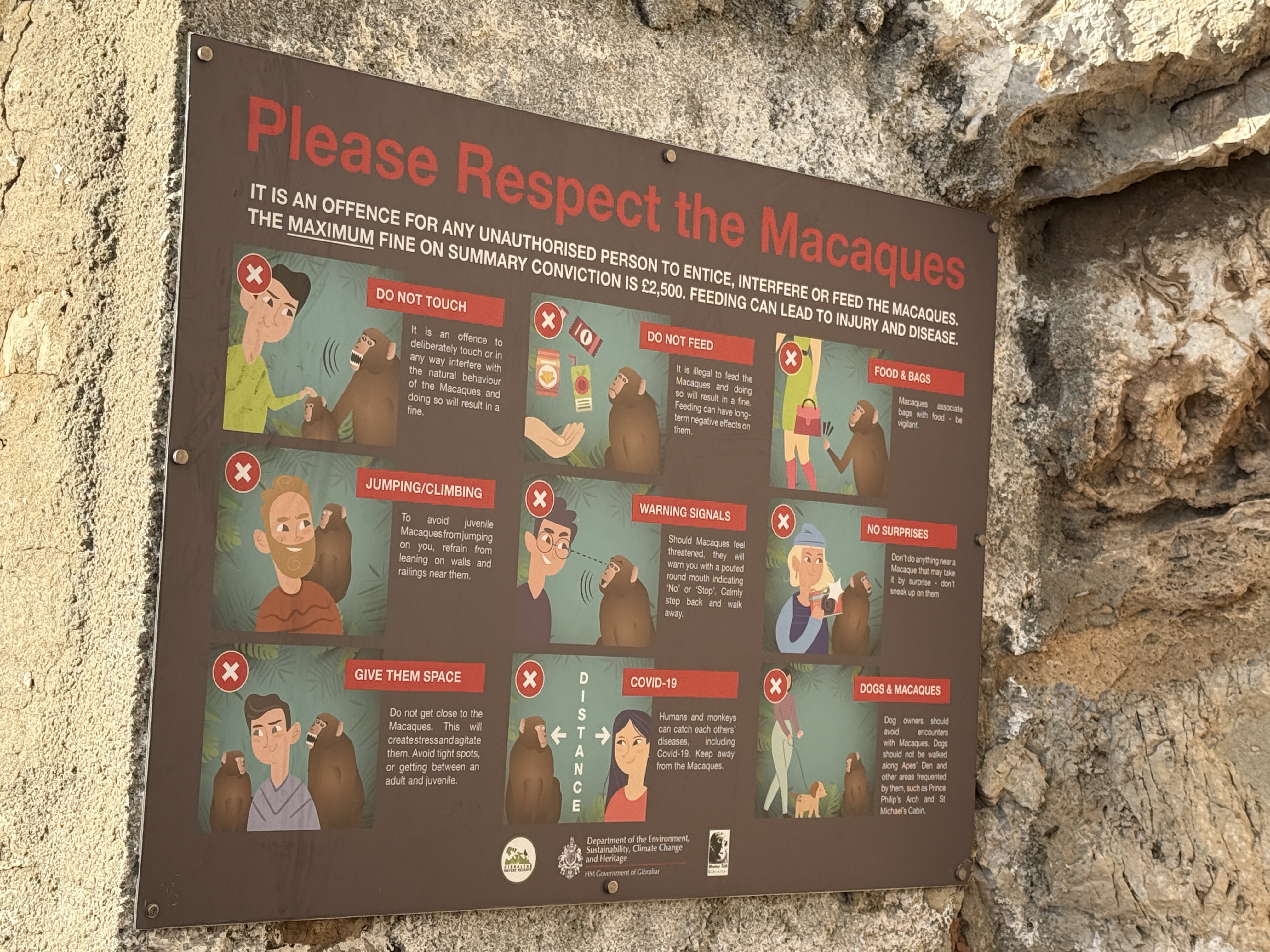
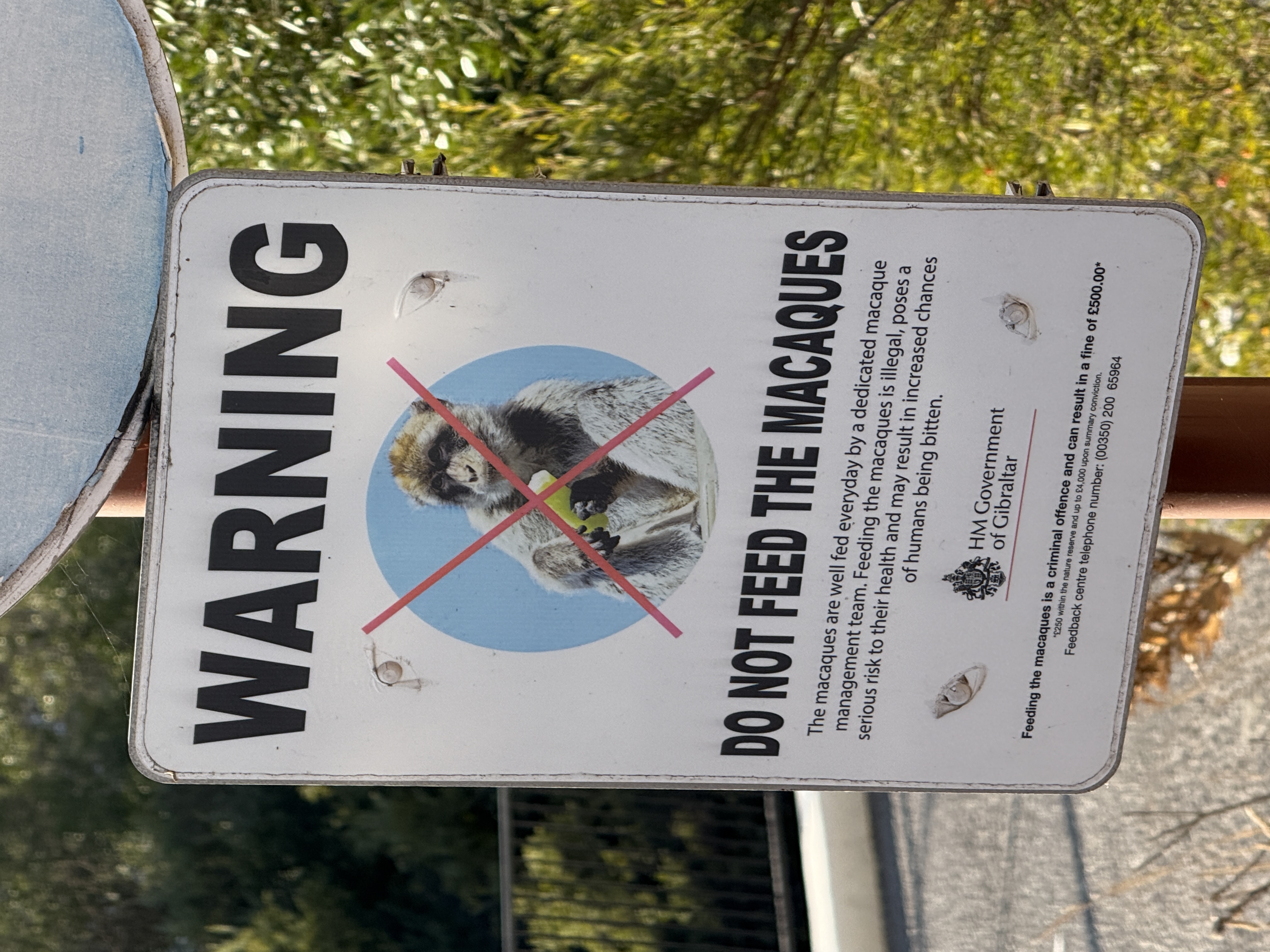
Feeding the macaques is illegal, and touching them or interfering with their natural behaviour is an offence unless done under licence for management, research or veterinary purposes. The Government says feeding and touching harm the monkeys and risk passing diseases in both directions, and in 2026 it announced extra staff for anti-feeding duties on the Upper Rock.